Tuesday, 15 January 2013

THE MANY FRAMEWORKS OF JEAN-LUC MOULENE


Jean-Luc Moulène at Modern Art Oxford (2 Sept - 25 Nov, 2012) and Thomas Dane Gallery, London (22 Nov, 2012 – 16 Feb, 2013)

(Draft material for Photomonitor, published here to coincide with the last weeks of the extended Thomas Dane exhibition)

From 'Strike Objects'

Jean-Luc Moulène (born Reims,1955) came to prominence as a photographer in the 1990’s and is probably best known for three series which explore – among other things – the nature of labour and the relationships between commerce and art:  Objets de Grève  (‘Strike Objects’, 1999-2000), goods manufactured on the assembly line by workers on strike, and sold in the parallel economy of the black market in order to help fund their cause; the closely related still life inventory of Produits de Palestine (‘Products of Palestine’, 2002-04) for which he photographed consumer products from the occupied territories, which sanctions prevented from circulating as part of the world market in the way they now circulate as photographs; and the somewhat notorious Les Filles d'Amsterdam (‘Girls of Amsterdam’, 2005, included in last year’s Paris Triennial), which examines identity at work while also aiming to combine the historically separate genres of portraiture and pornography. Moulène depicts prostitutes – to whom he showed the relevant 19th century examples - under their stage names in poses which give equal and unified emphasis to face and genitals.

From 'Girls of Amsterdam'

Moulène, however, has enough variety in his enigmatic photographic practice alone to justify his 1999 statement that ‘I think of my shows as group shows’[1] – an assessment which has been made all the more plausible since then by his decision to exhibit a wide range of films, drawings, paintings and sculptures (which he calls ‘Objects’ to emphasise their status as products) alongside his photographs (or rather ‘Documents’, as ‘they are between media and fine art, and so are called post-photographic documents and not photographs’[2]). Moulène has collectively titled his exploration of materials—manufactured and found, industrial and organic— ‘Opus’, so reinforcing the link to manufacture which has been a constant – indeed, Moulène spent a decade working for the naval arms company Thomson.

From 'Products of Palestine'

The range of Moulène’s work as a photographer is largely explained by his interest’s deriving not from his surface subject matter, but from the social and economic factors of which they are Documents, and from how the images are used and circulated as a result of their differing roles as media reportage, advertising or fine art – ‘unspecific objects but specific means’[3] is one of his slogans.  Similarly, his Objects set out to explore an underlying language of geometric forms and their mathematical expression. In both cases, it might be said, he starts from inside and tries to go outside. He also dances, as he himself has put it, between two extremes: ‘on the one side poetry, which is an invention of language with no structure; on the other side the total formality of mathematics. I don’t like the middle. So it’s poetry or mathematics… but art can be both[4]’. Or to put that, perhaps, another way: ‘the main function of an artist is to work on chaos and freedom: all the rest is left to politicians[5].’

Installation at Oxford, with blown and cast knots 

So it is that Moulène’s recent Oxford and London shows featured a dizzying variety of ways to present a giddying range of potential themes.  Modern Art Oxford featured a new film; a melted plastic bottle; a memorial stone; drawings of eyes; cast bronze knots set on trestles; a geometric construction which finds ‘order in a heap’; a video of Moulène himself ordering a different heap, ie doing his washing up; and an eclectic mix of photographs in the tradition of the flaneur. Thomas Dane’s two spaces contained his largest knot yet; birdcages enclosing ‘lungs’ of blue glass; explorations of the geometry of clocks; a cunningly simple collage of eye as finger; an adjusted model aeroplane; and photographs from his first stay in New York – in connection with his substantial exhibition at Dia Beacon and the Dan Flavin Art Institute, which itself included a hundred Objects, one scaled up by Renault to the size of a car, a set of monochromes and 299 photographs of weeds.  Both British shows included three-coloured knots in blown glass; other sets of monochrome ‘paintings’ made with biro ink ; and combinations of mirror and lycra  - so perhaps we should start with those.

Blown Knot 6 32 (Borromean) Varia 04

The topographic figure of the knot has recently become important for Moulène. He’s interested in how its mathematics has been used by scientists to describe natural phenomena, and in Lacan’s use of the three elements of the Borromean knot to represent the interdependence of the three orders of the real, the symbolic and the imaginary.  Moulène describes knots as ‘tools to describe complexity’, and adds that ‘my utopia for artworks is to create tools[6]’. Yet the sculptures themselves seem to cut through all that in favour of the resulting aesthetics, to move from inside to outside and from maths to poetry. The three-coloured knots, in particular, are quite a feat of glass-blowing – commissioned, in line with Moulène’s principles, through the channels of commercial manufacture rather than artistic outsourcing.  Their key characteristic is that no two of the three rings are linked on their own, but together all three are linked, and that leads to an immediate beauty.
From the series 'Monochromes / Samples'

If the knots generate complexity only to cut through it, bringing order to turbulence and chaos, then the ongoing series Monochromes / Samples (2011–) starts at the simple end but proves to have its complexities.  Moulène uses a palette knife to slather the ink from everyday BIC biros over a glossy board. Black, red, blue and green feature, but not yellow because BIC don’t make it, even though that – which is another topic – is a special colour for Moulène. That points to the industrial logic of the monochrome process, which seemed in America to parallel Dan Flavin’s nearby us of standardised industrial lighting, but felt more literary in Oxford, as if using the tools of writing to arrive at some kind of reductio ad absurdum of poetry. In Italy, no doubt, one would have thought of Alighiero Boetti’s biro works and in France of Yves Klein’s blue paintings. Moreover, the monochrome background has long been a characteristic means of Moulène denying unwanted spatial depth in photographic work. Monochromes / Samples also brings the viewer in, as partially reflected in the tactile smears. Complexity, then, reappears, along with another movement from inside to outside.

Stressed (Yellow)

The Stressed series (2012) consists of a square metre of mirror set beside a square metre of brightly coloured lycra which has been nailed so that it’s stretched to appear oblong. This visual paradox amalgamates concerns from the knots and the monochromes. The stressed element exposes how the underlying topography can be distorted by the time it reaches our perception, picking up the psychological undertones of the knots and relating to another theme of Moulène's emphasised at Thomas Dane: conflict . Stressed also effects a separation of the monochromatic and reflective aspects of the Biro works.

The Three Graces

Yet perhaps the most striking presences in Moulène’s British shows were more directly human. The Three Graces (2012) stand naked on a local hilltop in a nine minute silent black and white film, projected across a whole gallery wall in Oxford.  We’re told they are – as specifically sought by Moulène – three sisters, two of them twins. It’s far from obvious, though, which are the twins, setting up a dialogue with Stressed:   how have apparently common elements ‘inside’ led to differences ‘outside’? Moulène gave little direction, telling them to be fixed for the most part and to ‘be proud, be beautiful, be bored[7]’.  The Three Graces connects in some respects to Les Filles d’Amsterdam, examining the nature of the gaze in the context of the historic conventions of portrait, nude and landscape.  We’re placed in Paris’ position of choice, but how can we distinguish between the charm, beauty and creativity for which the trinity stand? And can we then apply the same process to the rest of the exhibition?

'Le Fontaine des Amoureux' 

Moulène, then, plays complex games in a serious way, with none of the irony or kitsch which is common in contemporary art. I’ve room to mention only part of his diffuse stream of work and ideas. Topics I haven’t said much on include systems of control; the derive and the nondescript; the eye as viewfinder; mysticism and the sun; the anthropology of cultures; his literary inspirations; and the circulation of documents and objects.

Installation at Thomas Dane

So what pulls all this together? Perhaps the relationship between art and commerce; the analysis of complexity; the movement from inside to outside; chaos and conflict; and the judgment of beauty – all touched on above. But Moulène has also spoken frequently about other potential candidates, suggesting that it’s another strategy of his to float multiple explanatory frameworks. Those include the centrality of the body; and ‘negation as a means of affirmation[8]’, by which I take it he means that one can define a position by showing what it is not, as when he pulls a knot from its surround to leave its position defined by the clay. By taking a critical stance on much of reality, one can by implication define a core body which has a different status.  That body, I suggest, is the body of the artist looking, of an artistic consciousness seeking to understand. Ultimately, what Moulène’s many approaches and frameworks demonstrate is the complex and elusive nature of our relationship to the world.

Images courtesy the artist / Modern Art Oxford / Thomas Dane


[1] Statement for show at Chantal Crousel, Paris 1999
[2] Moulène in conversation with Chris Dercon, Oxford, 2012
[3] Interview with Briony Fer in Jean-Luc Moulène. Walther König / Carré d’art, 2009.
[4] Moulène in conversation with Chris Dercon, Oxford, 2012
[5] Moulène in conversation with Chris Dercon, Oxford, 2012
[6] Interview with Coline Milliard in Modern Painters, Nov 2012
[7] Moulène in conversation with Chris Dercon, Oxford, 2012
[8] Interview with Briony Fer in Jean-Luc Moulène. Walther König / Carré d’art, 2009. 

Friday, 4 January 2013

TEN REASONS TO VISIT THE LONDON ART FAIR

Ah, the London Art Fair (Previews 15 Jan, public opening 16-20 Jan at the Business Design Centre, 52 Upper Street, Islington) . Very much sub-Frieze these days; not the most attractive location; many of the same galleries selling much-the-same stuff, a good proportion of it rather tacky… So why bother? In fact, there’s always enough interesting work to make a visit entertaining and worthwhile, it’s just a matter of speeding past where appropriate and slowing down for the good stuff. That typically includes the curated Photo 50 section and a high proportion of the galleries in Art Projects (eg another ten reasons could have been Beers Lambert, Ceri Hand, Cole, Edel Assanti, Hannah Barry, Limoncello, Tintype, Vela, Vigo and the chance to pick up the Catlin Guide to recent graduates' work). 

Here are ten to look out for... 


Untitled (Egungun series)

Leonce Raphael Agbodjelou at Jack Bell

Jack Bell, who travels the world to bring the unexpected to his Mason's Yard space, is showing Leonce Raphael Agbodjelou, the  leading photographer from the Republic of Benin. Here what may look like an improbably imaginative means of disguising the self for performative art purposes is in fact from one of several series which picture life in the Porto Novo region. Here one of the Egungun masqueraders who appear at Yoruba funerals to mark and guide the passage of the deceased to the spirit world, and  at festivals in order to forestall major misfortunes which threaten the local community. 


Carting the Cardboard

Steven Morgana at La Scatola Gallery

When Steven Morgana saw Michelangelo Pistoletto’s ‘The Mirror of  Judgement’  at the Serpentine last year, he wasn’t impressed, concluding that ‘taking a spiritual stroll through a cardboard labyrinth to then worship one’s image at a mirrored obelisk’ did ‘nothing to engage with conditions of  today’s globalised societies’. By chance, Morgana obtained 35 rolls of the cardboard used by Pistoletto, cut it up, added concrete, and made an unmirrored obelisk asserting its materiality and peculiar history in what he sees as a less indulgent style.  Morgana hopes this work ‘will express an affinity between the fate of extinct civilisations which created the original obelisks’ and the ‘uncertain future..  of  the contemporary civilisation to which it belongs’. Whatever you think of Pistoletto, it certainly makes a change from homages.


Jacobs Island -  Painting by Vasilis Avramidis; and MOCA London - Film by David Blandy

ALISN’s SUBLET

It’s not easy for small not-for-profit spaces and non-commercial groupings to show in an art fair: hence the radical approach of the Artist-Led Initiatives Support Network (ALISN), led here by the Deptford gallery run by sculptor Iavor Lubomirov and painter Bella Easton. They’ve bought a space shared by no fewer than 17 of the 300-odd cash-poor but imagination-rich artist-led organisations in the country*.  They’ll show an artist each, and the quality – Vasilis Avramidis, David Blandy and Julia Riddiough, for example – looks high. 

* A Brooks Art | ALISN | Alma Enterprises| Angus-Hughes Gallery | Artkapsule | ArtLyst | ATOI&CULL | Doorspace | Dover Arts Development | Jacob's Island | MOCA London | Lubomirov-Easton | LUPA | Occupy My Time Gallery | ]performance s p a c e [ | Schwartz Gallery | Transition Gallery.


Georgie Hopton at Poppy Sebire

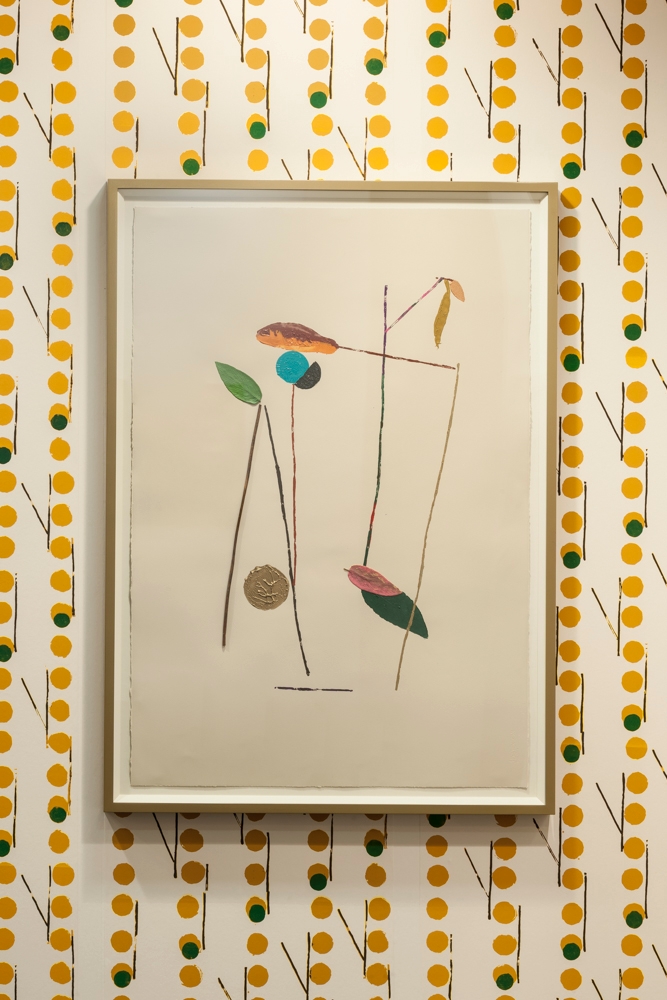
It’s a shame Poppy Sebire is closing her eponymous gallery, which has not only had a consistently impressive programme but also been perhaps the most artist-friendly of commercial spaces. More by way of celebrating a stimulating four year project that than mourning its end, she signs off with a first London Art Fair appearance, and promises to do so in style: Georgie Hopton will be taking over the entire booth with her gently witty photographs, vegetable prints and collages, all shown against her own wallpaper in a collaboration with the RA print department.  Expect an integrated adult garden context for playful childishness...


Eventide
Suzanne Moxhay at Bearspace

Julia Alvarez’ Deptford gallery is a regular at the Fair, and will exhibit 'Penumbra', the latest series by Suzanne Moxhay. She uses a combination of found images - the National Geographic is a favourite source - and model making to construct what are effectively her own small scale designs for film sets. She photographs and digitally manipulates these so that the miniature merges with the epic and it is hard to tell the real space from the illusory. The resulting environments, as she says, ‘exist in a space between various intersecting fields of representation while embodying a reality of their own’, in this case inspired by exploring the edgelands of London, where small patches of wilderness encroach on the man made environment, creating strange juxtapositions of the natural and urban.  


Wreath to Pleasure No. 1, 1992-3
Helen Chadwick at Richard Saltoun

Richard Saltoun, who has just opened his own gallery in Fitzrovia but is collaborating here with Karsten Schubert, is a particularly strong presenter of female artists from previous generations. Helen Chadwick prefigured aspects of the YBA’s approaches before her untimely death in 1996. Her thirteen-strong series of
‘Wreaths to Pleasure’ (she called them ‘bad blooms’) have a seductive repulsiveness to their bodily sub-texts.  ‘No.1’ clusters tightly-bunched tulips round a single black cherry in a well of oil to generate an image which collapses interior and exterior to appear at once cellular and sexual, 


Yellow Moon


Susan Derges at Purdy Hicks

Susan Derges has made her name by the wonderfully literal means of putting photographic paper in a river and leaving the moon to develop it. Her recent work finds a way to produce comparable effects in the studio with a camera, ripple tank, coloured film and various floated objects.  The results in her recent full show ‘Alder Brook’ stand alone, but can also be followed along with the imagistic fragment-poems by Thomas A. Clark. Here, for example, is the ‘continuous present’ of a body of water, ‘its task  / an infinite / alteration / of itself’ –  pretty much the task of art, then… 

Model Study 21, 2007
Elina Brotherus at Wapping Project Bankside

The French-based Finnish photographer  Elina Brotherus often casts herself in explicit dialogue with art history, concentrating on the artist-model dynamic by playing both roles. Here that's in another typical context, the combination of nude in the landscape, and uses a characteristically non-controntational pose n which she turns away from the viewer's gaze. The figure, echoing Bill Brandt as well as painterly traditions, takes on some of the monumentality of rock against the explicitly tracked flux of water. 


Being & Nothingness
Marie Toseland in 'Regional Interference' at Works|Projects

Bristol-based Works|Projects 'will explore the disruption of form and language, time and space' through five emerging artists from the South-West. I'll be interested to learn how writer-sculptor Marie Toseland's striking installation of 15 speakers, 6 amps, mixing desk, ice block and raw amplified sound tackles the themes implied by its title: 'Being & Nothingness'. Perhaps it performs the impossibility, according to Sartre's doomy account, of fully aligning consciousness with bodily being? Result, if so: a melting ice block of sexual frustration. 


In fact, Works / Projects showed a range of work including a rather quieter Toseland and this witty 'Pike Planning Inspectorate)' by Mike Ricketts, made with spray paint on suburb-sourced door numbers, hanging basket brackets.


the mirrory beaches, the rosy rocks


Samara Scott at The Sunday Painter 


Everything slips towards everything else in Samara Scott's sculptures, which have made her one of the more noticed of recent graduates. It's as if the plurality of the internet were applied to unglamorous left overs to simultaneously romantic and revolting effect.  So the  faux fur, dye, household paints used above are as typical as any set of constituents for a piece.  Scott herself says the work is 'a sort of liquidy making, where naive absent-minded processes direct material - leftovers, scum, scraps that I surround myself with - and trickle it through all sorts of ranges' and - she isn't short of words - that it's 'serious about sexy textures, juicy garnishes, stained carpets, glittery waterfalls and silhouettes kissing against sunsets'.  

Those proved good choices, and - sticking for no particular reason to abstract-tending work, I also liked...


Much of the Fair concentrates on 20th century British art: this year it seemed to William Gear who was most in evidence rather than, say, Nicholson, Heron and Frost.  Landscape, Grey / Orange (1964) at the Redfern Gallery was a nice example.


Hannah Know's  'Hyper' at Ceri hand, which uses thermochromatic sensitive paint on a jersey on a heated frame to make a Rothkoesque image which changes temperature and colour.


Beardsmore's combination of subtle greyscale explorations by Francesca Simon and Rebecca Salter with the vibrant colour of Ghanaian Atta Kwami's paintings representing the attributes ascribed to a dozen African premiership footballers by their fans. 


Darren Marshall's Hole 1 at Gallery Vela, combining an abstractionist's interest in the performative site of the painting as object with an earthquake source. 


The spiritual circuitry of 'Mandala 02' by ex-engineer Leonardo Ulian at Beers Lambert: a intricately symmetrical meditation on the components of computer technology.


...

Tuesday, 1 January 2013

CUTTING IN TO JANUARY

Sanja Iveković: still from 'Personal Cuts'
Perhaps I could warm up by recommending three shows I’m writing about for other places: 
* the two venue retrospective of Sanja Iveković at Calvert 22 and the South London Gallery is undoubtedly one of the best shows of the year (to 24 Feb)

* Zavier Ellis' latest choice of recent graduates, Young Gods, is also across two venues: CHARLIE SMITH in the East and the Griffin Gallery in the west (11 Jan - 16 Feb) 


* Work (near Kings Cross) features London Fieldworks' fascinating project 'Gustav Metzger Thinks About Nothing' (to 9 Feb)


My strongest recommendation, though, could be to get to Kingston before 2 Feb – having said which, I admit you could wait for the Andy Holden shows lined up for Camden Arts Centre and Anita Zabludowicz in 2013… it's going to be his year.


Ontographic Study for The Laws of Motion in the Landscape After Art History

 Andy Holden: Laws of Motion in a Cartoon Landscape @ the Stanley Picker Gallery, Knights Park, Kingston upon Thames

To 2 Feb:  www.stanleypickergallery.org

It’s not often that a show combines three substantial histories and manages to be funny to boot – I’d have guessed it was never, but Andy Holden achieves just that in Kingston Universty’s recently refurbished space. He covers cartoons, art, quantum physics and their post-Newtonian interconnections via found animations, eyes in space, dancing make-up, knitted sound sculptures and a vast digital collage which explains how the work obeys such ‘laws of motion in a cartoon landscape’ as ‘Anybody suspended in space will remain in space until made aware of its situation.’


Untitled

Alexey Kallima: Everything is for Sale @ Regina London22 Eastastle St – Fitzrovia

To 15 Jan: www.reginagallery.com

Alexey Kallima gives us the familiar trope of paintings as consumer goods  turning out to be of consumer goods – in this case as displayed in the street kiosks typical of his native Moscow. So far, so familiar, but he mixes straight canvasses with wall paintings, and an installation of packaging  waste  presses up against the basement space’s ceiling as if striving to rejoin its contents above.  The painted stalls, animated by abstract aspects where one would have expected the photographic, do set the acquisitive urge in motion. Add Kallima’s history of building an audience response into his work, the narrative arc of commerce in Russia, and the art references smuggled in, and I liked it…

'Are You Sitting Comfortably' and '21st Century Icon'

Kim Rugg: ‘Are You Sitting Comfortably’ @ Nettie Horn, 17A Riding House Street

Kim Rugg’s work brings a system-subverting media-savvy inter-connectedness to different techniques of wow-factor detail, whether that’s reorganising a newspaper into text-speak; reversing the map of Britain by degrees; posting letters with their stamps cut into Olympic rings; or using 49 van Gogh postcards to make a life-sized van Gogh. Don’t expect to sit too comfortably, though: the chair in question is covered in  news images of violent protest to emphasise, through the history recording medium of tapestry, how all-too-easily they fit into uninvolved lives. 
Sherrie Levine @ Simon Lee, 18 Berkeley St – Mayfair

Sherrie Levine, arguably the original radical subverter of originality, has been developing her reproductive methods of commodifying art for three decades. This century her seriality has tended towards luxury, and that’s the case here:  twelve elegant maple-framed mirrors lines the walls, accompanied by twelve pink glass skulls displayed in substantial glass and mahogany vitrines.  So the everyday viewer-inclusive reflection-as- art disguises its original source, meets the vanitas, and reinforces the potential for infinite reproduction. What elevates the whole is that the mirrors use bronze rather than silvering, connecting them to art traditions to peculiarly seductive effect – until we catch the skull beneath the flesh. 

Heman Chong in collaboration with Anthony Marcellini: INTERVIEW(S)
Ciprian MuresanHeman Chong in collaboration with Anthony Marcellini: INTERVIEW(S) @ Wilkinson Gallery, 50-58 Vyner Street

Both halves of this interesting double header feature, appropriately enough,  unusual ways of combining things. Downstairs several typically imaginative subversions from the  Romanian Ciprian Muresan include the jamming together of two theatrical companies acting different plays on the same stage so that the narratives and texts clash with chaotic and absurd effect.  Upstairs Heman Chong and Anthony Marcellini have each made or chosen 100 objects without conferring, then met up to group them across a bank of mirrored tables. Curious connections follow in line with stated methodological principles such as ‘objects can represent words or sentences in a conversation’.


Tree Line Flare
Isca Greenfield-SaundersSecond State


What, more paintings from photographs? Hold on, though, Greenfield-Saunders sources 50’s-60’s celluloid; absorbs, recolours and re-imagines her source by making a 7x 7 inch watercolour complete with such accidentals as burn, light leaks and strip-ends; and blows the effects up big in oils which use that same 7 x 7 to imply multiple small paintings in the big one. Result: highly eavesdroppable conversations between painting and analogue photography which liven up the potential endgames of both forms.

Liverpool Beach Burial
Keith Arnatt: Works 1967 – 1996 @ Maureen Paley, 21 Herald St – Bethnal Green


Keith Arnatt (1930-2008) made his name with witty conceptual pieces such as ascendingly sized piles of salt which enact a self-engulfment and the burial of self and others as a means of focusing on the behaviour rather than appearance of a sculptural object. He then found a way to smuggle such approaches into superficially conventional photographs: gardeners match their gardens, dogs engage with the camera in a play on the gaze, waste takes on painterly qualities.  All this, plus the winning late photos of post-it notes left for him by his wife, are well represented here. 


Michael Stubbs: ‘Untitled (cream)’, 1991,


Porta Nigra @ Hidde Van Seggelen Gallery, 2 Michael Rd – Chelsea / World’s End


Black Gate: Mark Kremer’s choice of works with physical, psychological or conceptual blackness at their heart brings fifteen artists into atmospheric inter-relationships. Ansuya Blom’s short film captures  hauntingly mysterious preparations before a man goes out; Taf Hassam tells the story of a photograph of an empty gallery, printed on a scale which seems to extend the Van Seggelen space; Klaas Kloosterboer lays an unframed, sutured-and-repaired painting over a table too small for it, to sinister effect; the jesting adjunct to that’s an early Michael Stubbs (the shows ‘white elephant’) in which cream-squirts of paint sandwich together five canvases to hide who knows what darknesses within... 


Moriyama blossom


William Klein + Daido Moriyama - Tate Modern

To 20 Jan: www.tate.org.uk

These effectively contrasted yet linked shows give us Daido Moriyama (born Osaka, 1938) as the dark, war-clouded mirror of American culture in Japan, and in particular of Paris-based American William Klein (born New York, 1928). Both are best known for collections of black and white photographs of cities - but where Klein is extrovert, exuberant, humane, Moriyama is introvert, alienated, nihilistic - and pushes further to explore the formal limits of the photograph as an analogue for troubled states of mind and culture. Even his cherry blossom looks beautifully disturbed.


Untitled

Zeng Fanzhi @ Gagosian Gallery, 2-24 Britannia St – Kings Cross

To 19 Jan: www.gagosian.com

I wasn’t the biggest fan of the mask paintings through which Beiijing-based Zeng Fanzhi found fame, even if one has fetched over £6m at auction. But I like the psychological landscapes in which tangled forest growth becomes entangled in turn with an over-layer of echoic abstract marks. Here Zeng ups the scale; adds splashier leaf-like cover-marks to his repertoire; and applies the thicketing technique to vastly blown up versions of Durer drawings, the better to emphasise how the whole series may after all come back to masking, to one culture or time seen through another as if throug ha world wide web...   


Images courtesy the relevant artists and galleries.

About Me

My photo
Southampton, Hampshire, United Kingdom
I was in my leisure time Editor at Large of Art World magazine (which ran 2007-09) and now write freelance for such as Art Monthly, Frieze, Photomonitor, Elephant and Border Crossings. I have curated 20 shows during 2013-17 with more on the way. Going back a bit my main writing background is poetry. My day job is public sector financial management.

Followers